What Does Matcha Tea Taste Like — and Why It Differs by Grade
The Core Flavor Profile: Earthy, Umami, and Creamy
If you have never tasted matcha before, the easiest way to frame it is as a deeply concentrated green tea with layers you do not get from a standard teabag. The flavor sits at the intersection of grassy, savory, and slightly sweet. Most people notice an immediate earthiness, followed by a wash of umami, and then a clean, lingering sweetness that tea drinkers often call "koku" — a Japanese term for richness and depth.

That umami quality is not accidental. Matcha plants are shade-grown for three to four weeks before harvest, a process that increases chlorophyll and boosts L-theanine concentration. According to NIH research on L-theanine and tea amino acids, this amino acid is directly responsible for the savory, broth-like quality many first-time drinkers notice. It is also part of why quality matcha feels smooth rather than sharp on the palate.
The creaminess is another standout feature. Unlike steeped teas where leaves are removed before drinking, matcha is a whole-leaf powder whisked into water or milk. You consume the entire leaf, which gives the liquid a thicker, fuller body. That texture plays a significant role in how you perceive the taste.
How Grade Changes the Flavor Completely
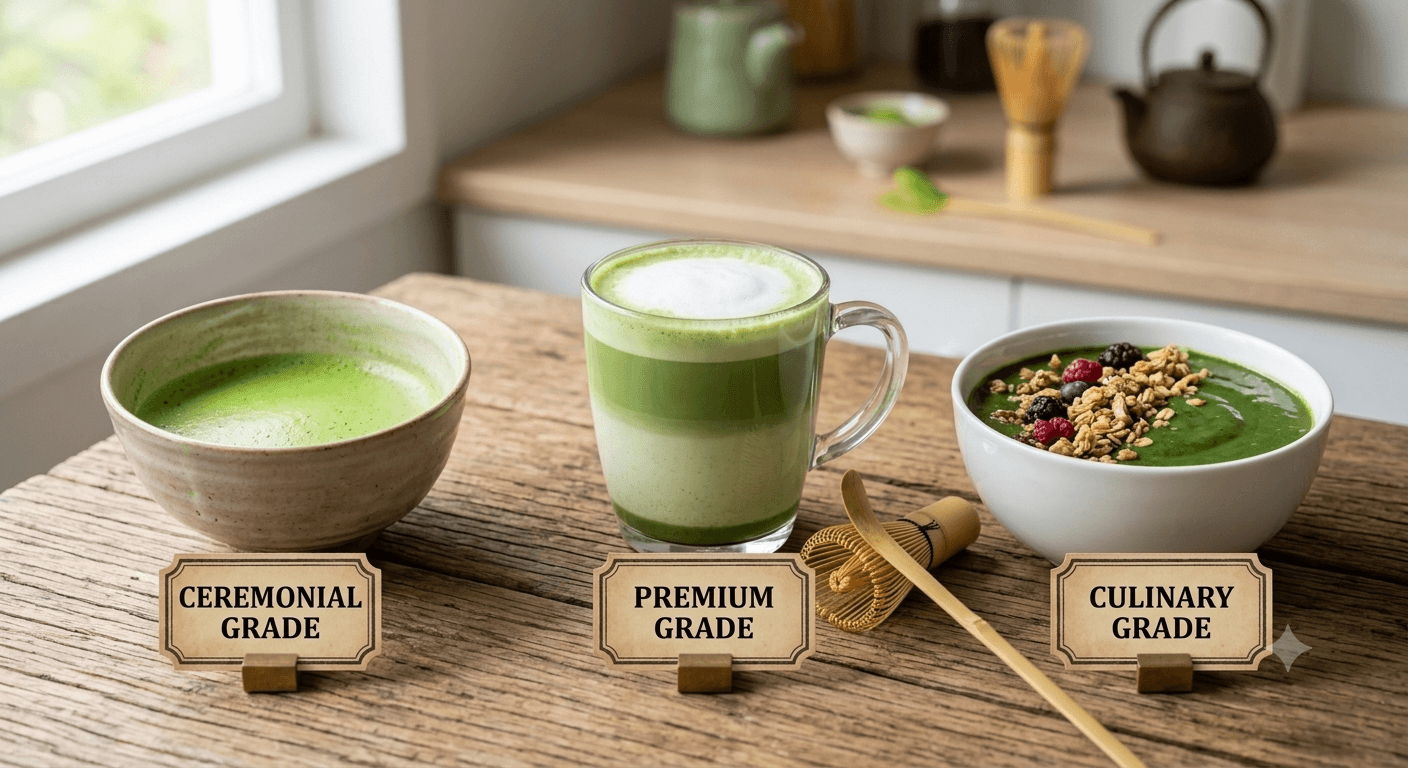
Not all matcha tastes the same, and grade is the biggest reason why. Understanding the difference helps you set realistic expectations before your first purchase.
| Grade | Flavor Profile | Best Use | Price Range |
|---|---|---|---|
| Ceremonial | Sweet, creamy, mild bitterness | Traditional tea preparation | $25-$50 per oz |
| Premium | Balanced, slightly grassy | Lattes, everyday drinking | $15-$30 per oz |
| Culinary | Bitter, robust, astringent | Baking, smoothies, cooking | $5-$15 per oz |
Ceremonial grade matcha is produced from the youngest, most tender leaves, typically the first flush of spring. The flavor is noticeably smoother and sweeter, with very little of the bitterness that puts many newcomers off. If you want to understand what is black tea compared to ceremonial grade, that contrast helps show why the grade benchmark matters so much.
Culinary grade uses older leaves harvested later in the season. These contain more tannins and less L-theanine, which tips the balance toward bitterness and astringency. That is not a flaw for cooking purposes. The stronger flavor holds up against sugar, dairy, and other ingredients in recipes like matcha ice cream, muffins, or smoothies.
To see how matcha fits alongside other tea categories, check out this overview of types of loose leaf tea — it gives you useful context for how different processing methods shape each tea's character.
Why Origin Matters as Much as Grade
Japan produces most of the premium matcha available in the United States, with Uji in Kyoto Prefecture considered the gold standard. Uji matcha tends to be sweeter and more complex, with a clean finish and minimal bitterness. Nishio in Aichi Prefecture is also widely respected and often slightly more accessible in price.
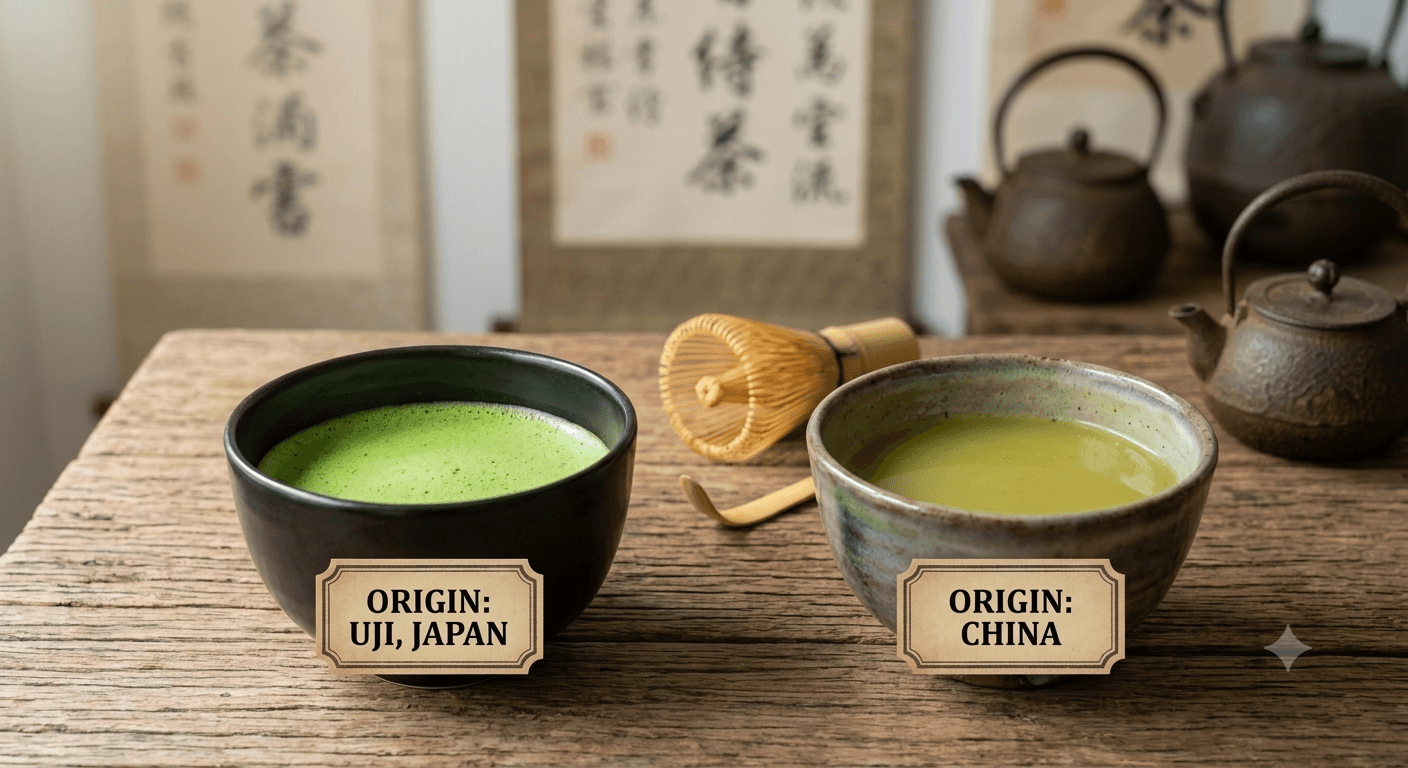
Chinese matcha exists at lower price points but typically tastes more bitter and less nuanced. The shade-growing tradition is not as deeply established in most Chinese production, and the processing differs at the stone-grinding stage. For everyday culinary use, Chinese matcha can be practical, but if you are drinking it straight, Japanese origin usually delivers a noticeably better experience.
The Wikipedia page on matcha offers a solid breakdown of how geographic and processing differences developed historically across Japan.
Comparing Matcha to Other Teas
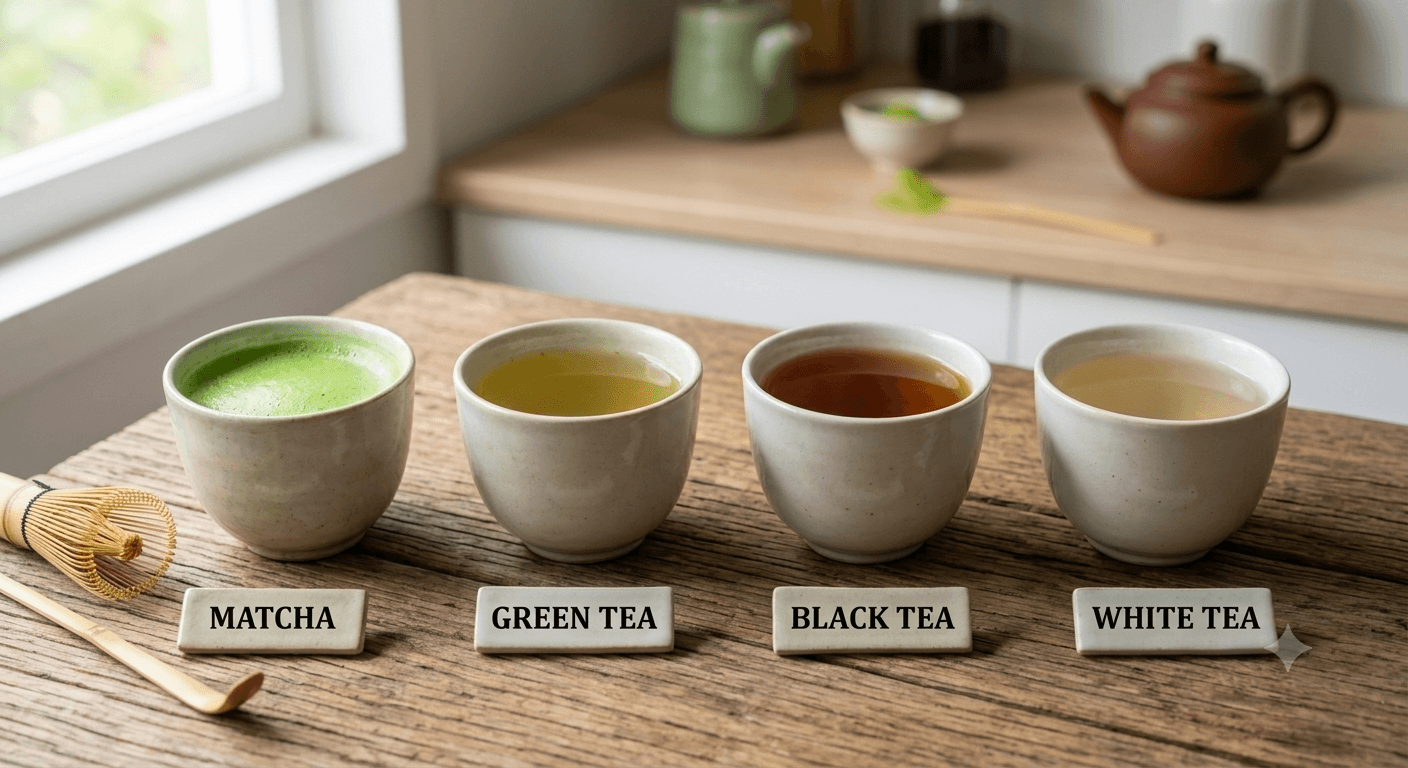
If you are familiar with other teas, you can use them as reference points to calibrate your expectations.
Green tea: Matcha is much more intense. Standard green tea is light and slightly grassy; matcha amplifies those qualities several times over.
Black tea: Much less in common. If you want to understand the contrast at the opposite end of the spectrum, reading about what is black tea shows how oxidation creates the malty, bold flavors that matcha simply does not share.
White tea: Matcha is far more assertive. White tea is floral and delicate; matcha is earthy and savory.
Oolong: Some overlap in complexity, but oolong is typically fruity and floral where matcha leans green and umami.
For broader comparisons between tea formats, the article on loose leaf tea vs tea bags whats the real difference covers how form factor affects flavor across many tea types.
🍵 OUR EXPERT OPINION
"When switching from standard loose leaf tea to matcha, your palate has to adjust to drinking the actual leaf rather than an infusion. If you find the earthy umami notes too intense at first, we always recommend starting with a high-quality Ceremonial grade prepared as a latte with oat milk. It naturally softens the transition without completely stripping away the tea's authentic, complex character."
Things to Know
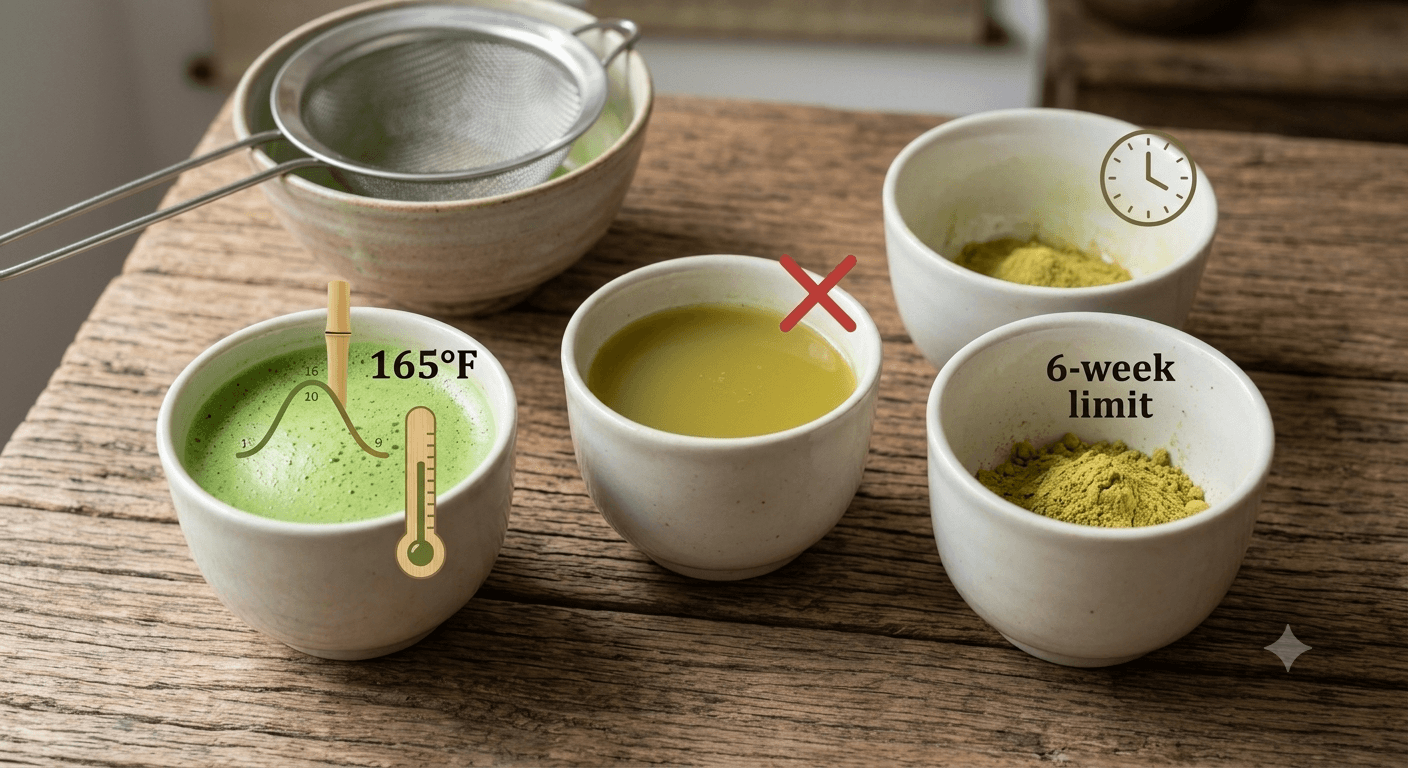
Bitterness in matcha is not always a quality flaw. Some high-quality ceremonial grades still carry a pleasant, clean bitterness that resolves into sweetness on the finish.
Water temperature has a dramatic effect on taste. Water above 175°F will scorch the powder and amplify bitterness. Stay between 160°F and 170°F for the smoothest result.
Fresh matcha tastes noticeably better. Once opened, matcha oxidizes quickly. Store it in an airtight container away from light and use it within four to six weeks.
The color tells you something about flavor. Vivid, bright green usually signals high L-theanine content and a sweeter profile. Dull, yellowish-green often means older leaves and more bitterness.
Sifting matcha before whisking helps prevent clumping, which can create uneven flavor distribution in the cup.
How Preparation Affects What You Taste
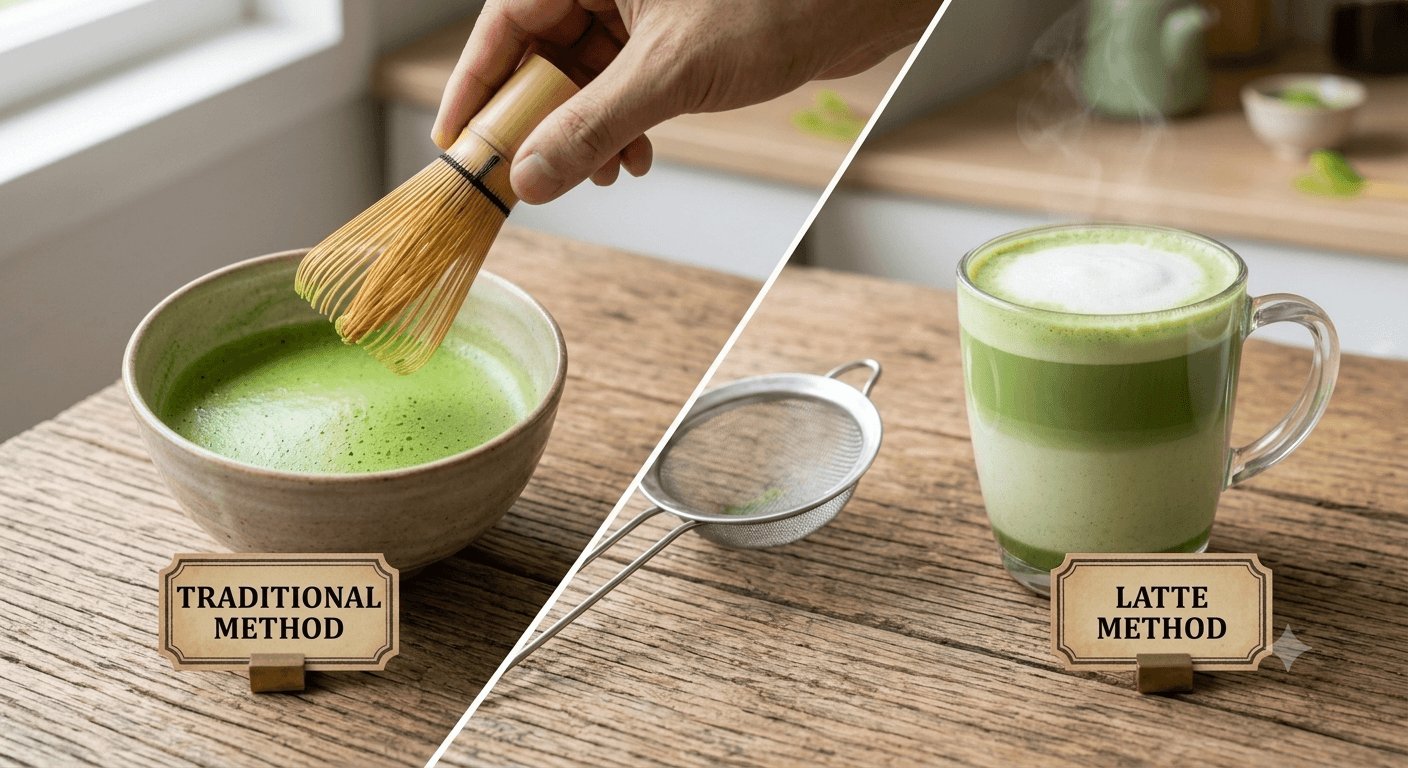
Even the best matcha can taste flat or bitter if it is prepared carelessly. The traditional method uses a bamboo whisk (chasen) and specific water temperature, both of which directly influence flavor development.
The Mayo Clinic overview of tea and health notes that preparation method affects not just taste but also how compounds like antioxidants are extracted and consumed. That aligns closely with what experienced tea drinkers report: technique matters when you how to make loose leaf tea correctly.
For step-by-step guidance on working with loose leaf formats including matcha powder, this resource walks you through the fundamentals in practical detail. And if you are newer to loose leaf tea in general, starting with an exploration of the topic will give you a solid foundation.
Adding milk produces a matcha latte, which rounds out bitterness and introduces a creamier texture. Oat milk is particularly popular in the United States because its natural sweetness complements matcha without overpowering it. A small amount of honey or agave works well if you want a little extra sweetness without refined sugar.
The Harvard T.H. Chan School of Public Health tea overview also confirms that the flavor compounds in matcha are sensitive to heat and handling, reinforcing why preparation details matter as much as the product you buy.
For anyone exploring the full range of what tea can offer, browsing a well-curated blog focused on loose leaf tea is a practical way to keep expanding your knowledge.
The Bottom Line on What Does Matcha Tea Taste Like
Matcha delivers a layered flavor experience that combines earthiness, umami, creaminess, and natural sweetness in a way that no other tea quite replicates. The grade you choose, the water temperature you use, and the origin of the leaves all shape what ends up in your cup.
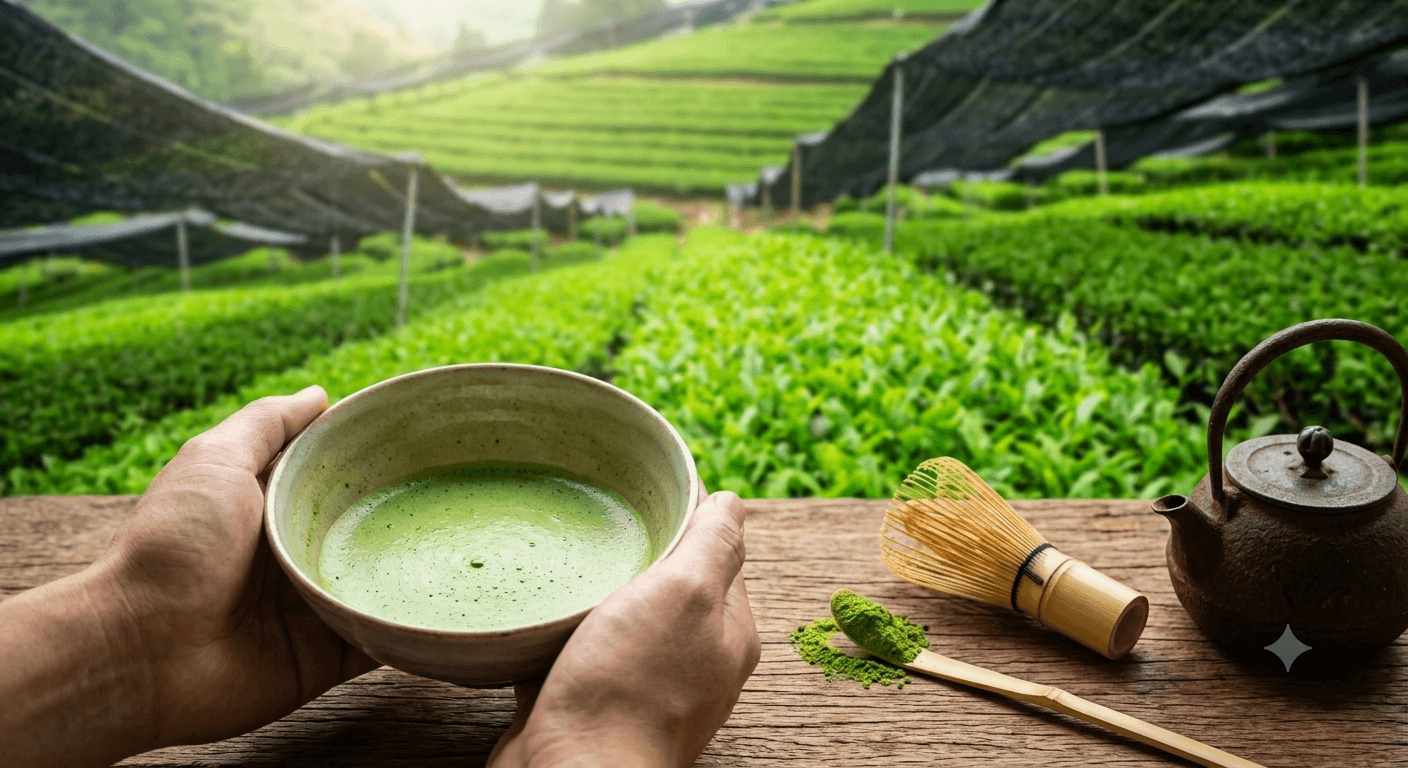
Start with a high-quality ceremonial grade matcha, use water between 160°F and 170°F, and whisk it well. If the flavor still feels intense, try it as a latte with oat milk before moving to straight preparation. Once you find your preferred format, the taste of matcha tends to become one you look forward to rather than work around.
FAQS
-
Quality matcha should not be overwhelmingly bitter, though a mild bitterness is normal and expected.
Ceremonial grade matcha has enough natural sweetness and umami to balance any bitterness. If your matcha tastes sharply bitter, the likely causes are water that is too hot, culinary grade powder, or matcha that has gone stale.
-
Matcha shares green tea's grassy, vegetal character but is far more concentrated and complex.
Because you consume the entire ground leaf rather than an infusion, the flavor is richer and thicker. Many people describe the experience as similar to green tea but amplified and creamier.
-
The natural sweetness comes from L-theanine and the amino acids concentrated by shade-growing the plant.
This process suppresses photosynthesis and redirects nutrients into the leaf, building up compounds that register as naturally sweet on the palate. It is one of the reasons high-quality ceremonial grade matcha can taste almost dessert-like without any sweetener.
-
Yes, most people who find matcha unusual at first adjust to it quickly, especially when starting with ceremonial grade or a matcha latte.
Introducing it gradually through lattes or baked goods allows your palate to adapt to the earthy, umami profile before drinking it straight.
-
Brand matters primarily as a signal of origin, grade, and freshness — all of which directly affect flavor.
A well-sourced ceremonial grade from a reputable seller will taste noticeably different from a generic powder. Spending between $20 and $40 per ounce for drinking matcha is a reasonable starting point in the US market.