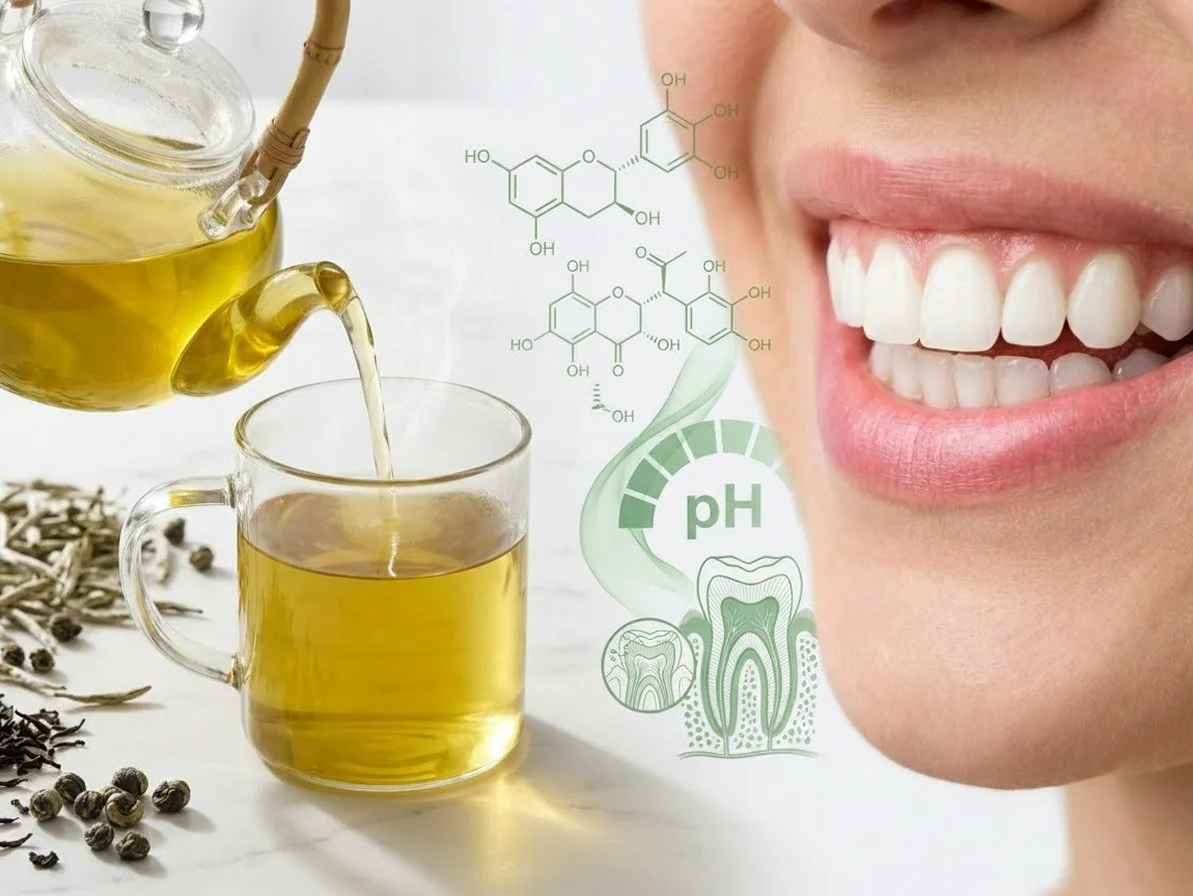
Does Green Tea Stain Your Teeth? The Hidden Science and How to Fix It
When people decide to ditch their morning coffee or heavy black tea in favor of a fresh brew of loose-leaf green tea, they usually do it for their health. Green tea is universally praised as a true wellness drink, famous for its ability to fight off cellular stress, support metabolism, and keep your body clean.
But if you switched to green tea thinking it was a 100% clear, stain-free alternative to dark coffee, you might be in for an unpleasant surprise.
Over time, you might start to notice your smile losing its bright shine, replaced instead by a dull, slightly off-color hue. This brings us to a major question that leaves many wellness lovers confused: does green tea stain your teeth?
The short answer is yes, it absolutely can. But the secret science behind how it happens—and how certain premium varieties like matcha alter the equation—is something most generic health blogs completely miss. Let’s break down the hard data so you can protect your enamel without giving up your favorite daily ritual.
Quick Takeaways: Coffee vs. Tea Staining Properties
Many people assume that because black coffee looks darker in a mug, it must damage your white smile faster than a light cup of green tea. According to dental research, the truth is actually the exact opposite:
Tannin Concentration: Tea contains a remarkably high level of naturally occurring polyphenols called tannins. Clinical data archived in the National Center for Biotechnology Information (NCBI) highlights that these complex polyphenols are directly responsible for causing extrinsic discoloration as they accumulate on the tooth surface.
The Color Factor: Coffee chromogens create a distinctly warm, yellow-brown surface stain that accumulates slowly over months.
The Green Tea Tinge: Green tea produces a stubborn gray-blue or dull gray tint. Because gray tones absorb light differently than warm yellow tones, a green tea teeth stain can actually make your smile look significantly darker and less vibrant than standard coffee discoloration.
The Chemistry Behind a Green Tea Tooth Stain
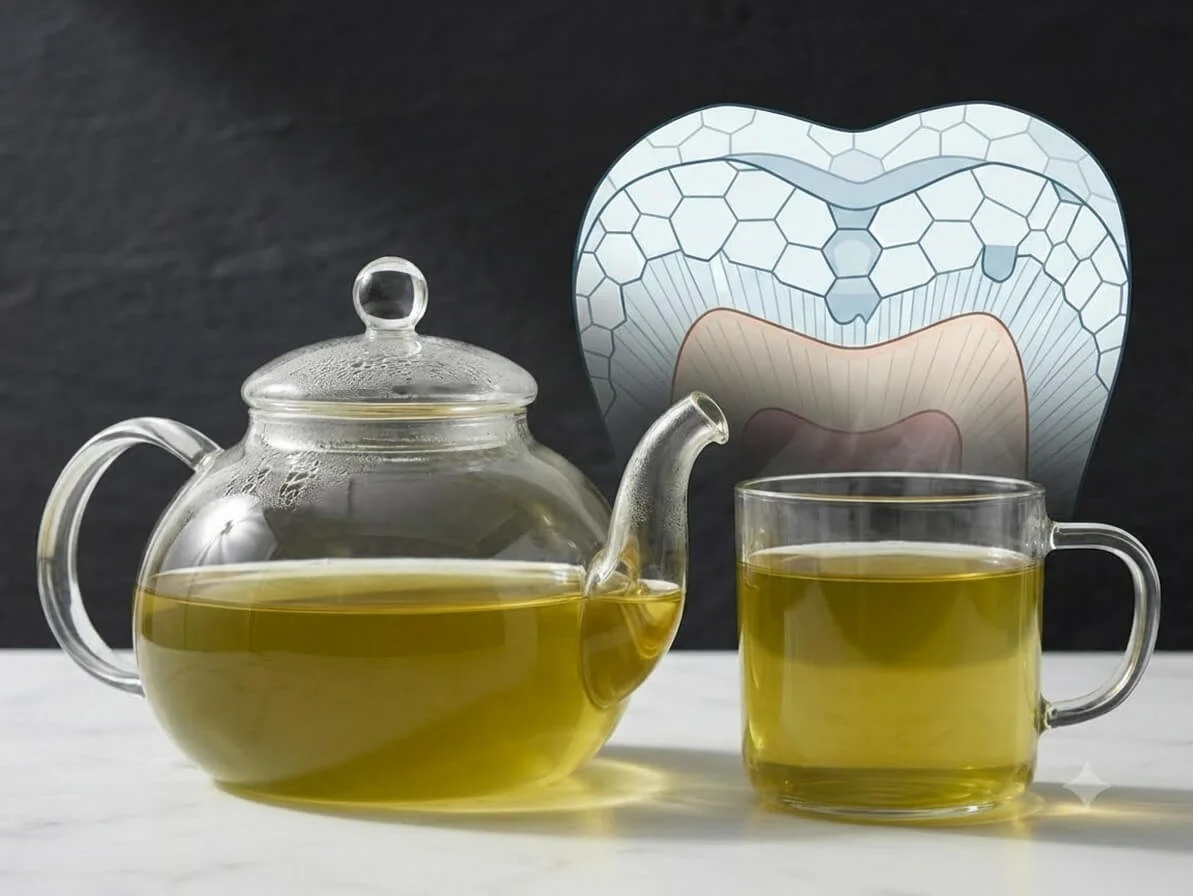
To understand why a light-colored beverage can cause such dark consequences for your enamel, we have to look at plant chemistry. Green tea causes discoloration through three specific biological agents:
1. Tannins (The Microscopic Glue)
Tannins are naturally occurring, bitter plant compounds found in tea leaves, grape skins, and wood bark. Tannins do not actually possess dark pigments themselves, but they act like a high-strength chemical adhesive. Classic in vivo dental research published on PubMed confirms that tannic acid adheres firmly to the dental pellicle, attracting other organic compounds and triggering rapid surface discoloration over time.
2. Acid Activity
While green tea is far less acidic than carbonated sodas or citrus juices, it still carries a mildly acidic pH. This low level of acid subtly micro-etches the very top layer of your teeth, temporarily opening up microscopic pores in the enamel. Once these pores are slightly relaxed, it becomes incredibly easy for external pigments to slip inside and settle.
3. Natural Pigments
Green tea is packed with organic plant pigments, including a high concentration of chlorophyll. When these pigments encounter a tooth surface that has been softened by mild tea acids and coated in sticky tannins, they bind tightly to the tooth structure over time.
The Matcha Exception: Does Matcha Stain Teeth More?
This is where the distinction between how your tea is grown and processed becomes critical to your oral health. Many consumers ask: does green tea stain teeth more than coffee, and where does matcha sit on the list?
Matcha is a unique subcategory of green tea. Instead of steeping loose leaves in hot water and throwing the plant matter away, matcha is made by grinding the entire tea leaf into an ultra-fine, velvety green powder that you whisk directly into your liquid.
Because you are consuming the actual whole plant tissue instead of a filtered water infusion, matcha delivers a significantly higher dose of tannins and intense green chlorophyll straight to your mouth.
While matcha is an absolute powerhouse for your body—containing high levels of antioxidants that actively help clear out oral bacteria and fight off tooth decay—its structural design means it has the potential to leave a heavier surface residue on your teeth compared to a lightly steeped loose-leaf green tea.
🍵 OUR EXPERT OPINION
"Because matcha is a stone-ground powder, you are consuming the actual plant tissue, which contains far more dense chlorophyll and tannins than steeped green tea. To protect your enamel without giving up your morning matcha ritual, always follow your bowl with a quick rinse of plain water, or enjoy it as a latte. The fats in plant milks can bind to tannins, making them less likely to stick to your teeth."
How to Prevent Tea Stains on Teeth: The 5-Step Protocol

You do not need to abandon your healthy green tea routine to maintain a flawless, bright white smile. By changing how you drink your tea, you can completely neutralize its staining potential. Here is the definitive guide on how to prevent tea stains on teeth:
1. The 30-Minute Brushing Rule
Your first instinct after finishing a cup of green tea might be to run to the bathroom and brush your teeth. Do not do this. Because the mild acids in tea temporarily soften your enamel, brushing your teeth immediately acts like sandpaper, scrubbing the green tea pigments deeper into the porous structure of your teeth and causing enamel wear. Instead, wait 30 to 60 minutes for your saliva to naturally rebuild and harden your enamel before brushing.
2. The Universal Water Rinse
The simplest tool in your oral hygiene arsenal is plain water. Immediately after finishing your cup of green tea or matcha, take a big sip of clean water, swish it thoroughly around your mouth for 30 seconds, and swallow or spit it out. This rinses away up to 80% of the loose tannins and pigments before they ever have the chance to cross-link and bond to your enamel.
3. Move to High-Quality Loose-Leaf Teas
Commercial, mass-market paper tea bags are packed with "tea dust" and broken leaf fragments. Because these tiny particles have a massive surface area exposed to water, they rapidly dump an uncontrolled, heavy wave of bitter tannins into your cup within seconds. Premium, whole loose-leaf green tea unfolds slowly and releases a clean, highly controlled nutrient profile with far fewer aggressive, loose tannins.
4. Deploy the Casein Milk Hack
If you enjoy your green tea or matcha with a creamy texture, consider adding a splash of milk. Clinical studies tracked by the National Institutes of Health reveal that advanced discoloration caused by tea can be remarkably difficult to reverse once pigments set into the deep layers of the tooth. To block this before it happens, adding milk introduces casein, a natural dairy protein that binds chemically to tea tannins. Once casein attaches to a tannin molecule, the tannin is neutralized and can no longer glue pigments to your enamel.
5. Drink in Focused Sessions
Many busy professionals keep a large travel mug of green tea on their desks, taking tiny sips over a span of three or four hours. This is disastrous for your dental color. Continuous sipping keeps your teeth constantly bathed in a fresh layer of sticky tannins and mild acids all day long, giving your enamel zero time to recover. It is much better to enjoy your cup of tea in a single, focused 15-to-20-minute session, rinse with water, and let your mouth reset.
Why Tea Stains Are More Than Just a Cosmetic Issue
While most people worry about tea stains because of how they look, dentists warn that discoloration can also be a red flag for your overall oral health.
When tannins coat your teeth, they don't just attract pigments—they also create a sticky surface area where dangerous plaque buildup can thrive. If these surface stains are left untreated, they can bond with bacteria, significantly raising your long-term risk of developing gum disease, enamel erosion, and painful cavities.
This is also why you must be incredibly careful with popular internet DIY whitening trends. Using raw baking soda or activated charcoal to scrub away green tea teeth stains can backfire terribly. These highly abrasive home remedies act like sandpaper, permanently stripping away your outer enamel over time. Once that enamel is gone, the yellowish dentin underneath is exposed, making your teeth look even darker and leaving them hyper-sensitive.
If surface stains are starting to build up, skip the risky DIY hacks and visit your dentist for a professional cleaning or a tailored whitening treatment that lifts stains safely without thinning your enamel.
FAQS
-
No. Green tea discoloration forms what dentists call extrinsic stains, meaning the pigments sit on the outer surface layer of the tooth enamel. Because these stains are locked onto the outside of the tooth by tannins, they can be easily lifted through routine dental hygiene cleanings or standard professional whitening treatments.
-
Yes. White tea is harvested from the youngest, most delicate buds of the plant and undergoes almost no processing or oxidation. While it still contains natural tannins, the stains produced by white tea are exceptionally light and translucent, making them virtually invisible to the naked eye compared to green or black teas.
-
Absolutely. If you enjoy iced green tea or iced matcha lattes, drinking through a reusable straw is an incredibly efficient shortcut. A straw bypasses your front teeth entirely, ensuring that the heavy concentration of tannins and pigments goes straight to the back of your throat without making contact with your visible smile.